
Why Cycling Offers Brands Something Few Sports Can: Time and Attention
Published on
45.6 million.
That's the number of French viewers who watched at least one minute of the 2026 Tour de France across France Télévisions' channels and platforms.
That's 72% of the population aged four and over, setting a new all-time record. At the finish on the Champs-Élysées, viewership peaked at 8.3 million, while the Bastille Day stage on 14 July attracted an average audience of 5.1 million viewers. These numbers don't just tell the story of another successful sporting event. They confirm that cycling has quietly become one of the most powerful audience draws on the French sporting calendar. For brands seeking scale, visibility and sustained engagement, that presents a significant opportunity, provided they understand what makes the sport so effective.
In this Insight:
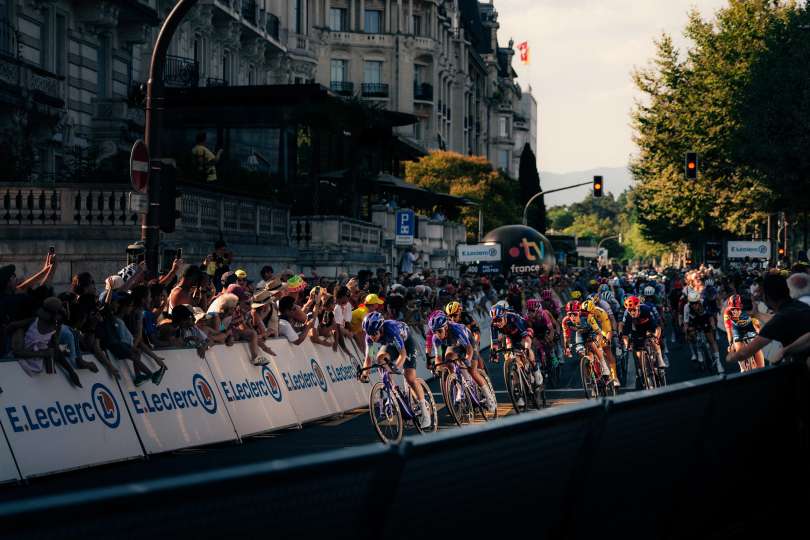
It starts with a level of accessibility few sports can claim. Cycling is the only sport that comes to its audience rather than the other way around: no ticket to buy, no stadium to reach, just a spot by the roadside. Each edition of the Tour de France attracts around 12 million spectators along the route, free of charge. It's effectively an open-air stadium that reinvents itself every day, stretching hundreds of kilometres across the country.
That accessibility carries over to the screen. At a time when much of elite sport is becoming increasingly fragmented across subscription services, cycling remains one of the few major sports still widely available on free-to-air television. Ligue 1 McDonald's, the UEFA Champions League, and leading rugby and basketball competitions have largely moved behind paywalls. Cycling, by contrast, has resisted that shift. On its Wednesday night multiplex broadcast, traditionally one of its strongest audiences of the season, Ligue 1+ attracts an average of 807,000 viewers. A single Tour de France stage on France 2 regularly delivers audiences measured in the millions during the middle of the afternoon.
Professional sport may dominate media attention, but the size of the audience it now reaches is often far smaller than many assume. Free-to-air cycling continues to deliver mass reach at a scale few rights holders can match. Whether on the roadside or through the television screen, the sport remains remarkably open and accessible. For brands looking to maximise visibility without barriers to entry, that is one of cycling's most compelling strengths.
Alongside its accessibility, cycling benefits from a highly favourable calendar. The Tour de France takes place in July, one of the quietest periods in the sporting year, and its afternoon broadcasts face far less competition for attention than prime-time events. As a result, the Tour regularly tops French television audiences for weeks at a time, outperforming long-established entertainment programmes. The same advantage extends to the spring classics and the Vuelta, which occupy similarly uncluttered slots.
What brands gain is not only reach but time. A Tour stage delivers four to five hours of live coverage, with team jerseys and sponsor branding visible throughout. Individual stages attract audiences of three to four million viewers, while 32 million people tuned into at least part of the 2026 Tour de France. The event is also broadcast in 190 countries through around 100 channels, including 60 live broadcasters, giving brands consistent international exposure across the cycling calendar.
Unlike many sports, cycling does not force brands to compete for fleeting moments of attention. It provides hours of uninterrupted visibility in an environment with relatively little competition for audiences.


Cycling also offers sponsorship assets that are difficult to replicate elsewhere. The Tour de France publicity caravan is perhaps the best example. Ranking second only to the race itself as a reason fans attend roadside, it enables direct consumer engagement through product sampling, entertainment and face-to-face interaction across three weeks and thousands of kilometres. In cycling, the brand experience becomes part of the event itself.
The audience extends well beyond live viewing. Replay viewing on france.tv reached record levels in 2026, while Tour-related content generated more than 260 million social media views. Together, these touchpoints create multiple opportunities to engage fans, both on the roadside and online, particularly among younger audiences who increasingly consume the sport through highlights and social content.


Brands are already responding. CMA CGM's title partnership with Decathlon CMA CGM through 2030 demonstrates how companies are investing in cycling as a year-round platform rather than a single-event sponsorship. Others are taking a talent-led approach. Rising star Paul Seixas recently appointed SPORTFIVE to manage his marketing strategy and commercial partnerships, creating new opportunities for brands seeking authentic connections with the next generation of athletes.
The message is clear: cycling's commercial potential extends far beyond the Tour de France. The brands investing today are securing positions in a sponsorship landscape that remains relatively open, but is unlikely to stay that way for long.
SPORTFIVE is a global sports marketing agency that specialises in sports rights, marketing, and entertainment. We work with sports organisations, clubs, and brands to create and optimise commercial opportunities in the sports industry. SPORTFIVE is involved in various aspects of sports business, including the sale of broadcasting rights, sponsorship and partnership management, stadium naming rights, and other marketing initiatives.
SPORTFIVE creates innovative, engaging solutions that are worthy of the incredible sports, athletes and partners we work with, and the passionate fans who follow them. Campaigns are built collaboratively, based on trust and transparency, and enabled by a deep understanding of the industry, the agency’s global reach, digital intelligence and creative courage.
The result is gamechanging sports partnerships that redefine standards in the sports and entertainment space.
SPORTFIVE believes in the power of five - bringing brands, rights holders, media platforms, fans and ‘us’ together through sport.
SPORTFIVE is a global sports marketing agency that specialises in various aspects of the sports and entertainment industry. The agency works with sports organisations, teams, and brands to optimise commercial opportunities.
One of SPORTFIVE's key areas of focus is the sale and management of sports media rights, including broadcasting and digital distribution deals. They negotiate and facilitate partnerships, sponsorships, and naming rights for sports entities, helping them enhance their brand value and revenue streams.
Additionally, SPORTFIVE provides expertise in marketing strategies, assisting clients in building strong connections with their target audiences. Their comprehensive approach spans across the sports business landscape, from media rights to sponsorship management, contributing to the overall growth and success of their clients in the dynamic world of sports marketing.
